

The WHO Global Diabetes Compact
What is the WHO Global Diabetes Compact?
The WHO Global Diabetes Compact is an initiative launched by the World Health Organization in 2021 to respond to the increasing burden of diabetes around the world. Its launch coincided with the 100th anniversary of the discovery of insulin.
The Compact has the vision to reduce the risk of diabetes and ensure that all people who are diagnosed with diabetes have access to equitable, comprehensive, affordable and quality treatment and care. The work undertaken by the Compact also supports the prevention of type 2 diabetes by addressing obesity, unhealthy diet and physical inactivity.
The Compact is working towards five global diabetes coverage targets to be achieved by 2030:
- 80% of people with diabetes are diagnosed;
- 80% of people with diagnosed diabetes have good control of glycaemia;
- 80% of people with diagnosed diabetes have good control of blood pressure;
- 60% of people with diabetes of 40 years or older receive statins; and
- 100% of people with type 1 diabetes have access to affordable insulin and blood glucose self-monitoring.
The targets are a core part of the work requested by Member States through a resolution adopted at the 74th World Health Assembly in 2021, resolution WHA74.4.
Why is the WHO Global Diabetes Compact needed?
More than 800 million adults worldwide live with diabetes, a number that has more than quadrupled since 1990.
Diabetes is a chronic disease that develops when the pancreas does not produce enough insulin or when the body cannot effectively use the insulin it produces. This leads to hyperglycaemia, also known as high blood sugar, which, if left unmanaged, can cause serious damage to many parts of the body, including the heart, eyes, nerves, blood vessels and kidneys.
In many parts of the world, particularly in low-and middle-income countries, people living with diabetes face significant barriers to accessing the healthcare, education and medication they need to manage their condition effectively.
Limited access to diagnosis, treatment and ongoing support negatively affects the health outcomes and well-being of people living with diabetes. While premature mortality from other major noncommunicable diseases is decreasing, early deaths from diabetes have been rising since 2000.
Who the WHO Global Diabetes Compact works with
The WHO Global Diabetes Compact works with a broad range of partners to achieve its vision, including:
- WHO and Member States;
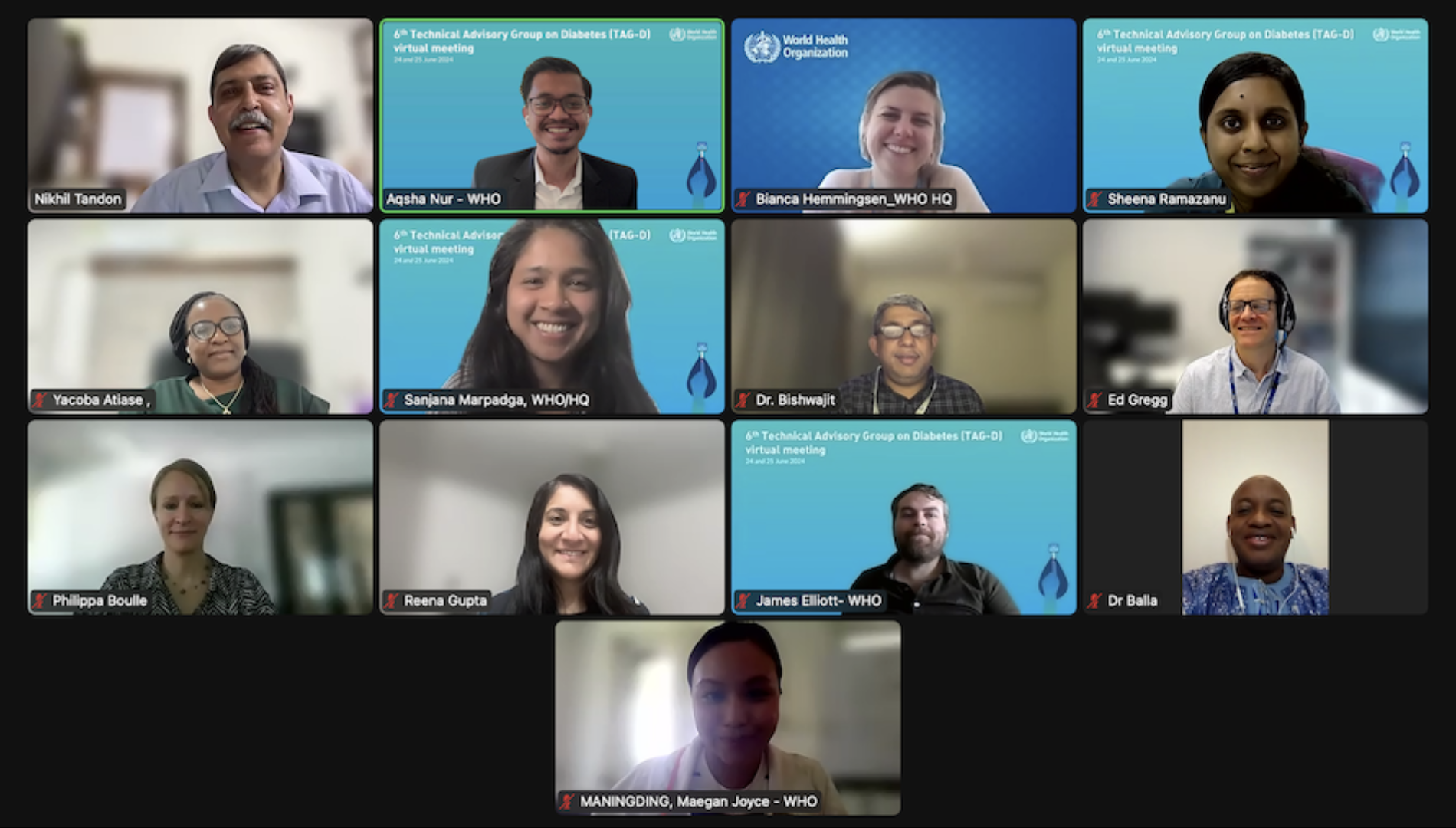
- the Technical Advisory Group on Diabetes (TAG-D);
- the WHO Global Diabetes Compact Forum;
- people living with diabetes; and
- the private sector.
For up to date information about opportunities to get involved, sign up for the WHO Global Diabetes Compact monthly newsletter.
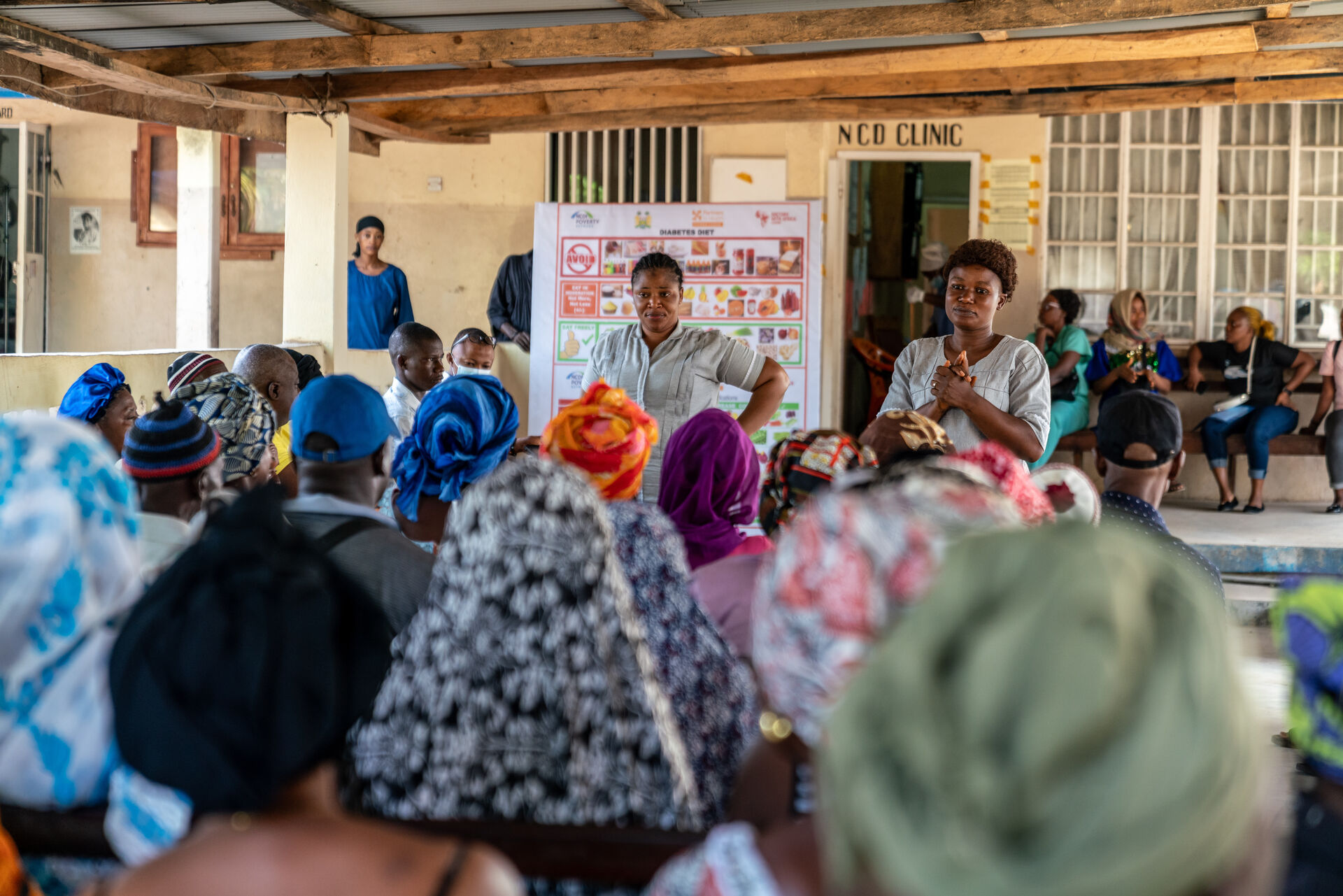
Engagement

How the WHO Global Diabetes Compact works
Achieving the ambitious goals set out in the five global diabetes coverage targets requires a comprehensive approach.
Global Diabetes Compact workstreams
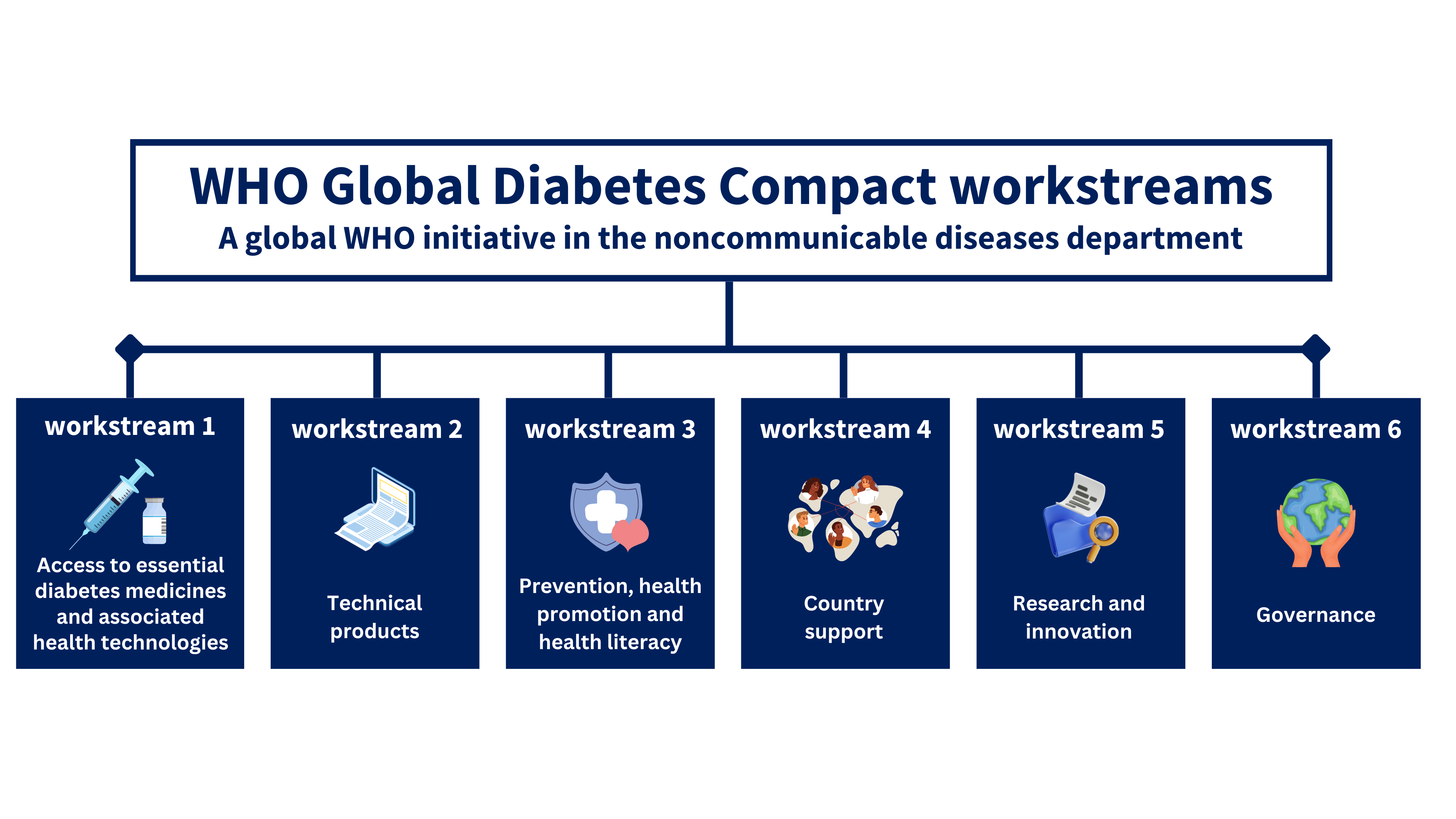
The Compact aims to respond to the increasing global burden of diabetes through six interconnected workstreams:
- access to essential diabetes medicines and associated health technologies
- technical products
- prevention, health promotion and health literacy
- country support
- research and innovation
- governance.
Events
Newsletter
Other resources
Contact
Publications
All →WHO recommendations on care for women with diabetes during pregnancy
WHO maternal and perinatal health guidelines are relevant to those providing care and support during pregnancy, labour, childbirth and postnatal periods,...
Report of the eighth meeting of the WHO Technical Advisory Group on Diabetes: meeting report, 16-17 June...
The WHO Technical Advisory Group on Diabetes (TAG-D), established in August 2021, will provide technical advice to WHO on matters relating to WHO’s...
Availability, price and affordability of health technologies for the management of diabetes
The WHO list of priority medical devices for management of cardiovascular diseases and diabetes, https://iris.who.int/handle/10665/341967, describes those...
WHO guideline on HIV service delivery
This WHO guideline recommends integrating services for hypertension, diabetes, and mental health (including depression, anxiety, and substance use) into...